
Full-service design means one team carries your home from the first sketch to the final walkthrough, and that continuity is what protects your vision, your budget and your timeline.
Most homeowners start a project the traditional way. They hire an architect, take the drawings out to bid, choose a builder, then find an interior designer somewhere along the way. Each handoff is a chance for ideas to get lost, for costs to drift and for people to point fingers when something doesn't line up.
It's a familiar story: a beautiful set of plans that comes in far over budget, a builder who has to reinterpret details the architect never resolved, or finishes chosen after framing that don't quite fit the space. None of it is anyone's fault exactly. It's what happens when the people designing a home and the people building it aren't working as one team.
Full-service design is the alternative. Here's what it actually includes, and how it can save you money along the way.
What full-service design actually includes
Full-service design covers every phase of your home under one roof, with the same team accountable from start to finish.
Discovery and site analysis. We start with how you want to live: how you use your mornings, where you gather, what views you never want to lose. Then we study the site itself, including sun, views, topography, setbacks and local zoning, because the land shapes the design as much as your wish list does.
Concept design. We develop the overall form, layout and character of the home, testing ideas early against both your goals and a realistic budget so you fall in love with something you can actually build.
Design development and pricing. As the design gets more detailed, our builders are in the room pricing it in real time. You see what choices cost while there's still time to adjust, not after the plans are finished.
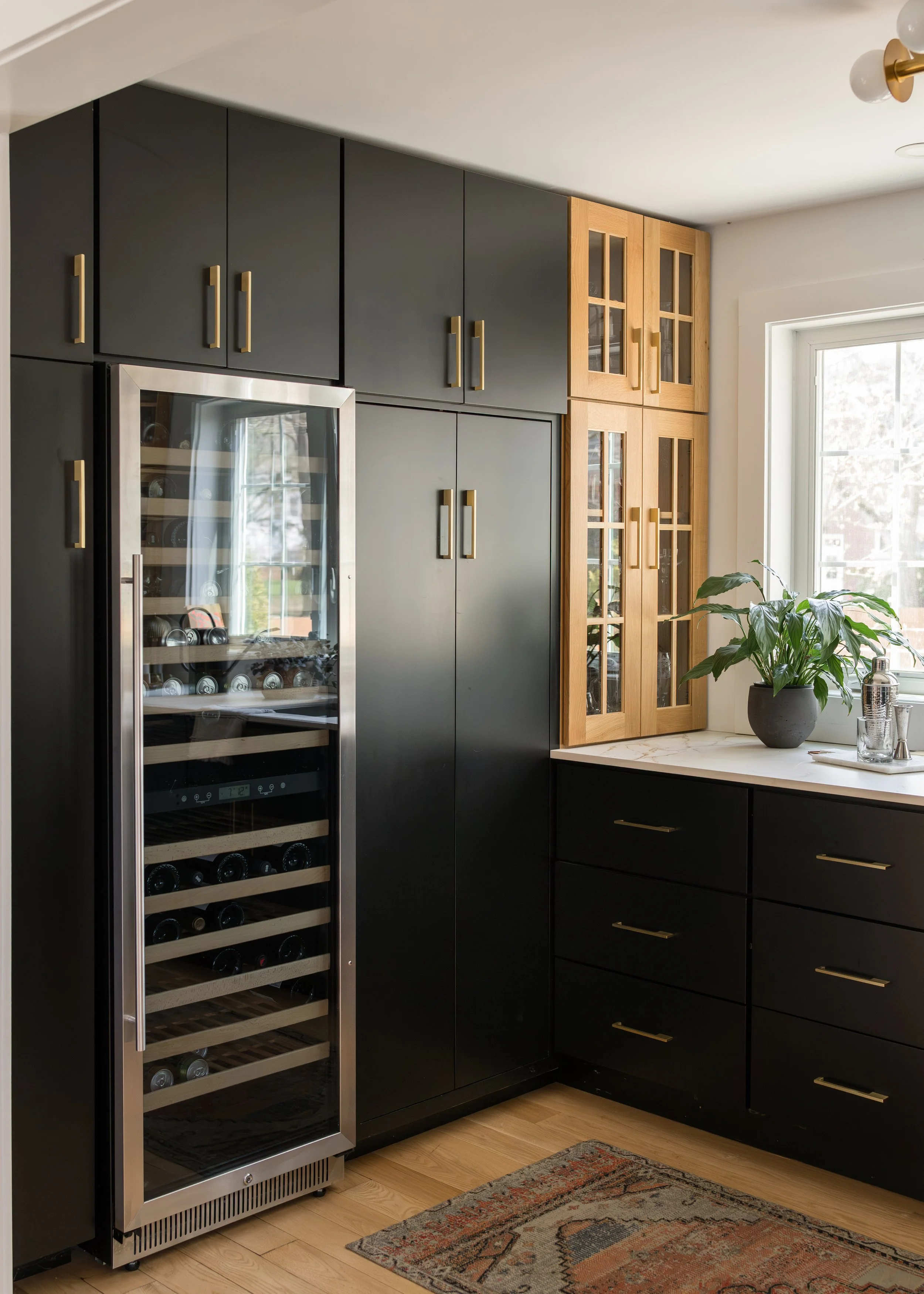
Interior design and selections. Layout, cabinetry, lighting, tile, fixtures and finishes are designed alongside the architecture rather than chosen later. The home feels cohesive because the inside and outside were conceived together.
Permitting and approvals. We prepare drawings and manage applications with local building departments, planning boards and conservation commissions, so you're not left navigating that process on your own.
Construction. The team that designed your home builds it. Questions in the field get answered by people who know exactly what was intended, and details get executed the way they were drawn.
Completion and beyond. We walk the finished home with you, take care of the punch list and remain your point of contact after you move in.
How full-service design can save you money
Full-service design isn't always the lowest number on the first quote, but it often leads to a lower total cost, because it removes the most common causes of budget overruns.
No paying to redesign after the bids come in. In a traditional process, plans are often finished before anyone prices them. When bids come back over budget, you pay to redesign or cut features you loved. With builders pricing the design as it develops, you make tradeoffs early, while they're still cheap to make.
Fewer change orders. Change orders are one of the biggest drivers of cost overruns, and many come from gaps between what was drawn and what can actually be built. When the same team designs and builds, those gaps get solved on paper instead of in the field, and the details get built the way they were designed.
Selections priced up front. Choosing finishes alongside the design means your budget reflects what you actually want, rather than placeholder allowances that grow once real selections are made.
Site challenges caught early. Sloped lots, ledge, wetlands, zoning limits and flood elevations all affect cost. Identifying them during design, and designing around them, avoids expensive surprises after work begins.
Less time, lower carrying costs. Overlapping design, pricing and permitting can shorten the overall schedule, which reduces costs like rent, construction loan interest and time away from your home. And with one team accountable, you never pay for disputes over whether a problem is a design issue or a construction issue.
Is full-service design right for you?
It's the right fit for most homeowners planning a new build or a significant renovation, and especially for a few kinds of projects:
You love your location but your current house no longer works, and you're weighing renovation against rebuilding.
You own a lot or a teardown and want a home designed around the site and the views.
You live out of state or have a busy schedule, and you want one trusted team managing the project rather than coordinating several firms yourself.
You care about design and want the finished home to look like the vision, not a value-engineered version of it.
If you're early in the process, that's the best time to start the conversation. The earlier one team is involved, the more money and stress full-service design can save you.
Let's start with a conversation
Every home we design and build starts the same way: a conversation about how you want to live and what your property makes possible. Whether you're in New Hampshire, Maine or on Massachusetts' North Shore, we'd love to hear what you're imagining.