
How Much Does a Bathroom Remodel Actually Cost? An Honest Breakdown
Ask five people what a bathroom remodel costs and you’ll get five different numbers. That’s because “bathroom remodel” can mean anything from new paint and a vanity swap to taking the room down to the studs and rebuilding it. The honest answer starts with scope, not square footage.
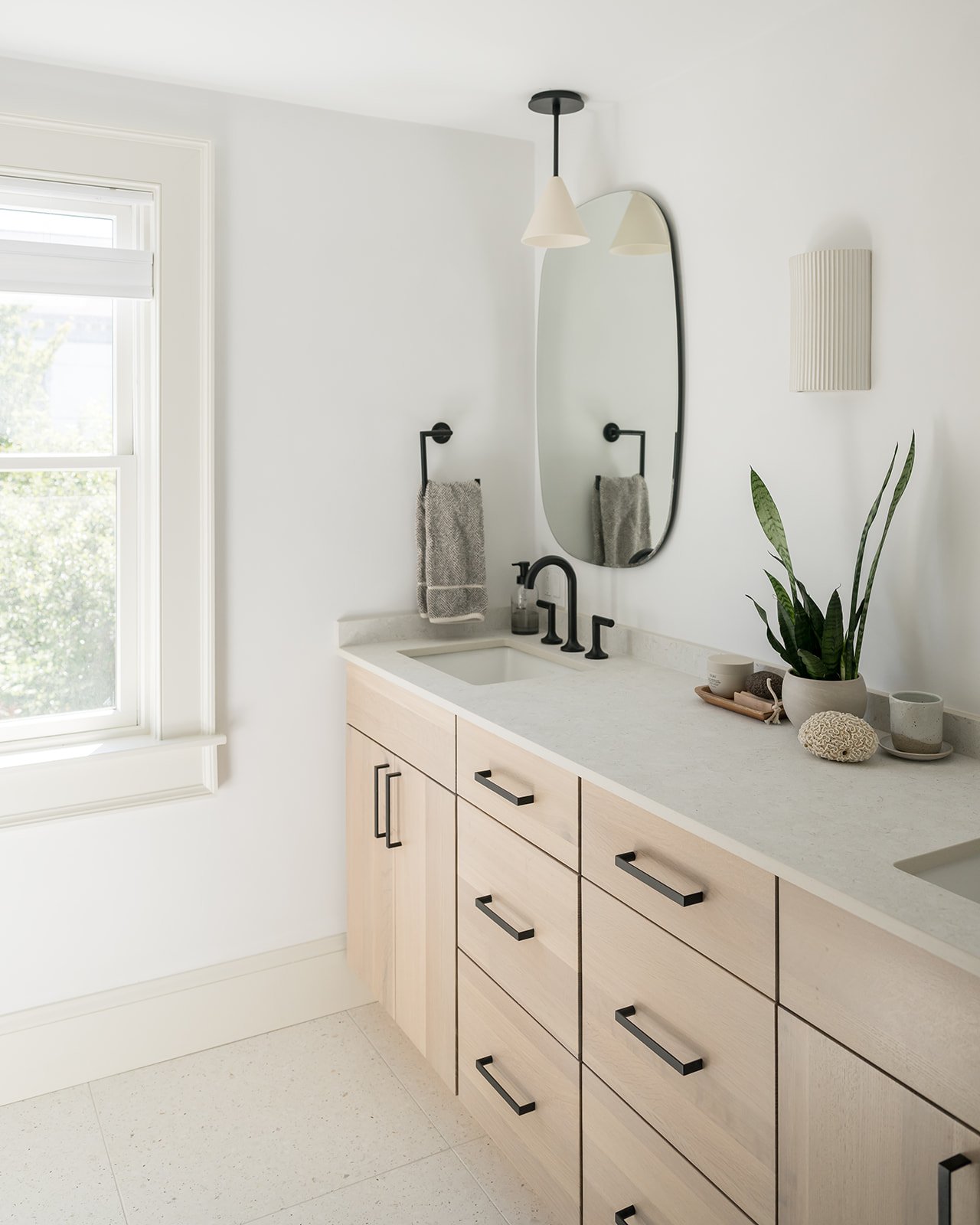
The national baseline
Most national guides put the average bathroom remodel around $15,600, with a typical range of roughly $6,500 to $24,700.
Treat those numbers as a starting point. They blend a lot of builder-grade projects together, and they don’t reflect custom millwork, specialty tile, or the cost of labor in your area. At [Firm Name], projects in [region] typically look like this:
Refresh (same layout, new vanity, fixtures, lighting, paint, maybe new flooring): ($10,000-$25,000)
Full remodel, same layout (demo to the studs, new waterproofing, tile, vanity, fixtures): ($30,000-$60,000)
Full remodel with layout changes or custom work (relocated plumbing, walk-in shower, custom vanity, specialty tile): ($60,000-$90,000+)
For reference, one national breakdown puts a cosmetic remodel near $11,600 and a full remodel with demolition near $18,700.
What actually moves the number
Scope. Keeping fixtures where they are is the biggest money-saver in any bathroom. Moving a toilet, shower, or sink means opening floors and walls and rerouting plumbing.
Labor. In a typical mid-range remodel, labor accounts for roughly 50% to 65% of the total cost. That’s why a small room with lots of tile can cost more than a bigger room with simple finishes.
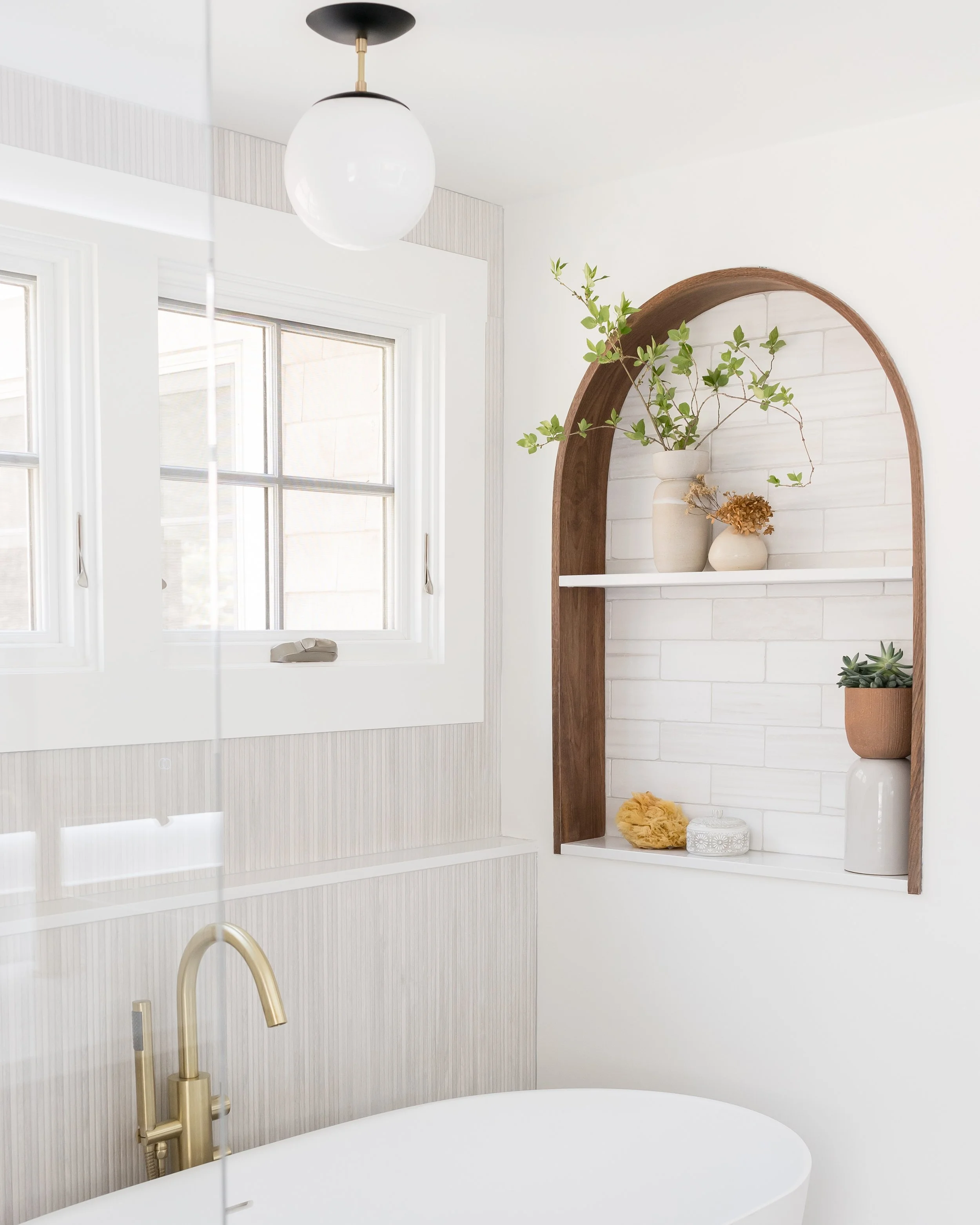
The shower. Waterproofing, tile type, niche details, glass, and fixtures add up quickly. A large walk-in with handmade or intricate tile sits at the high end of the budget.
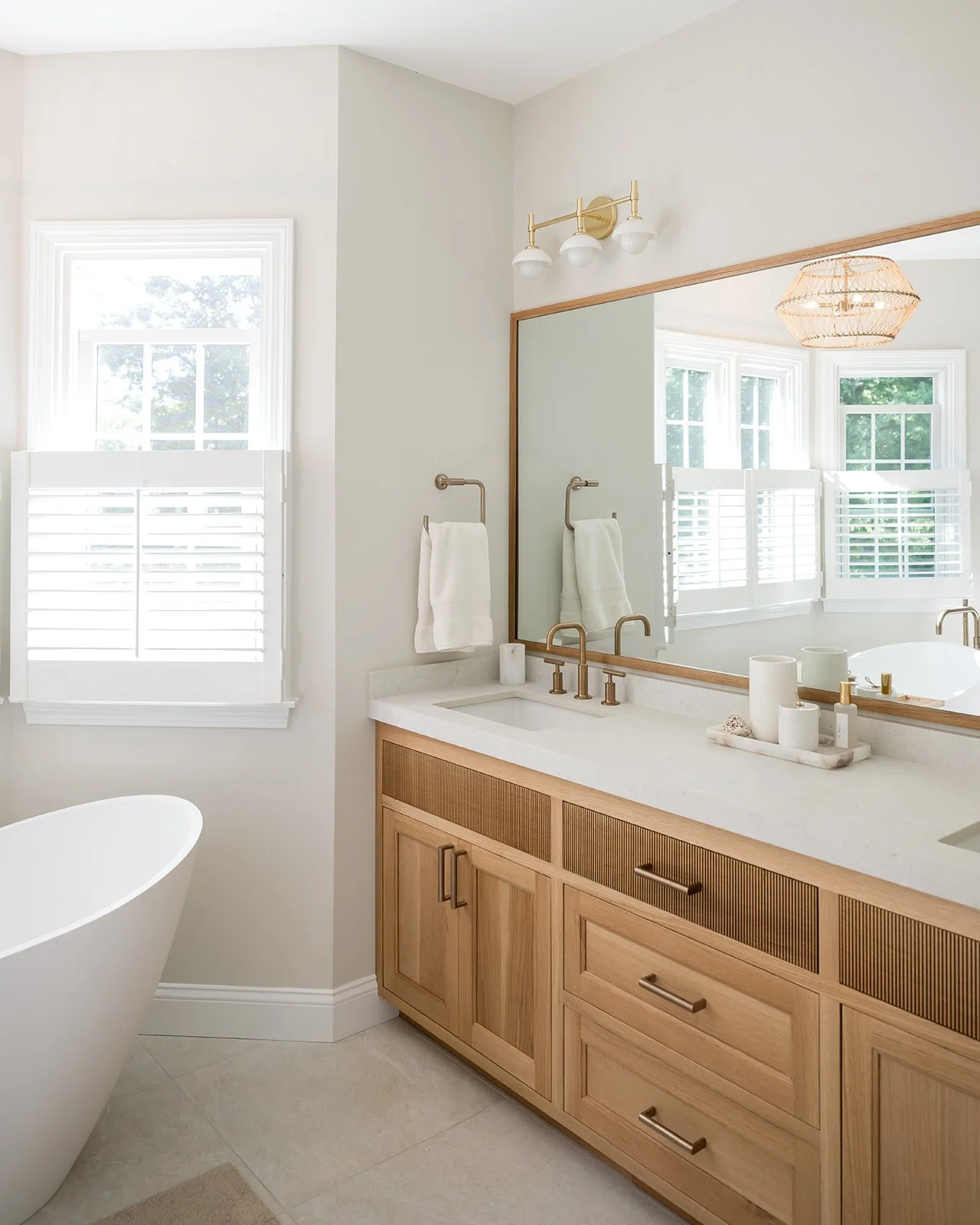
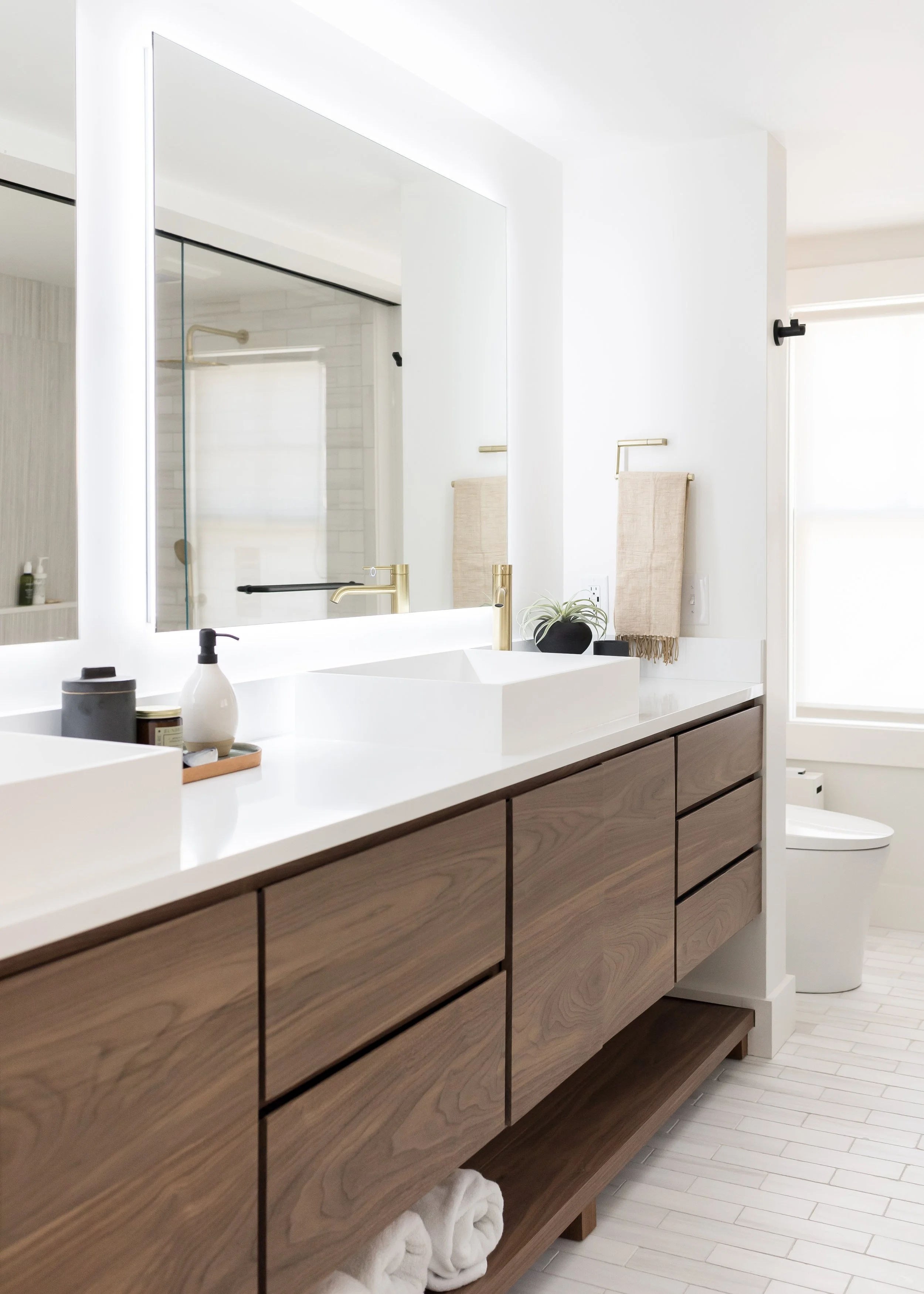
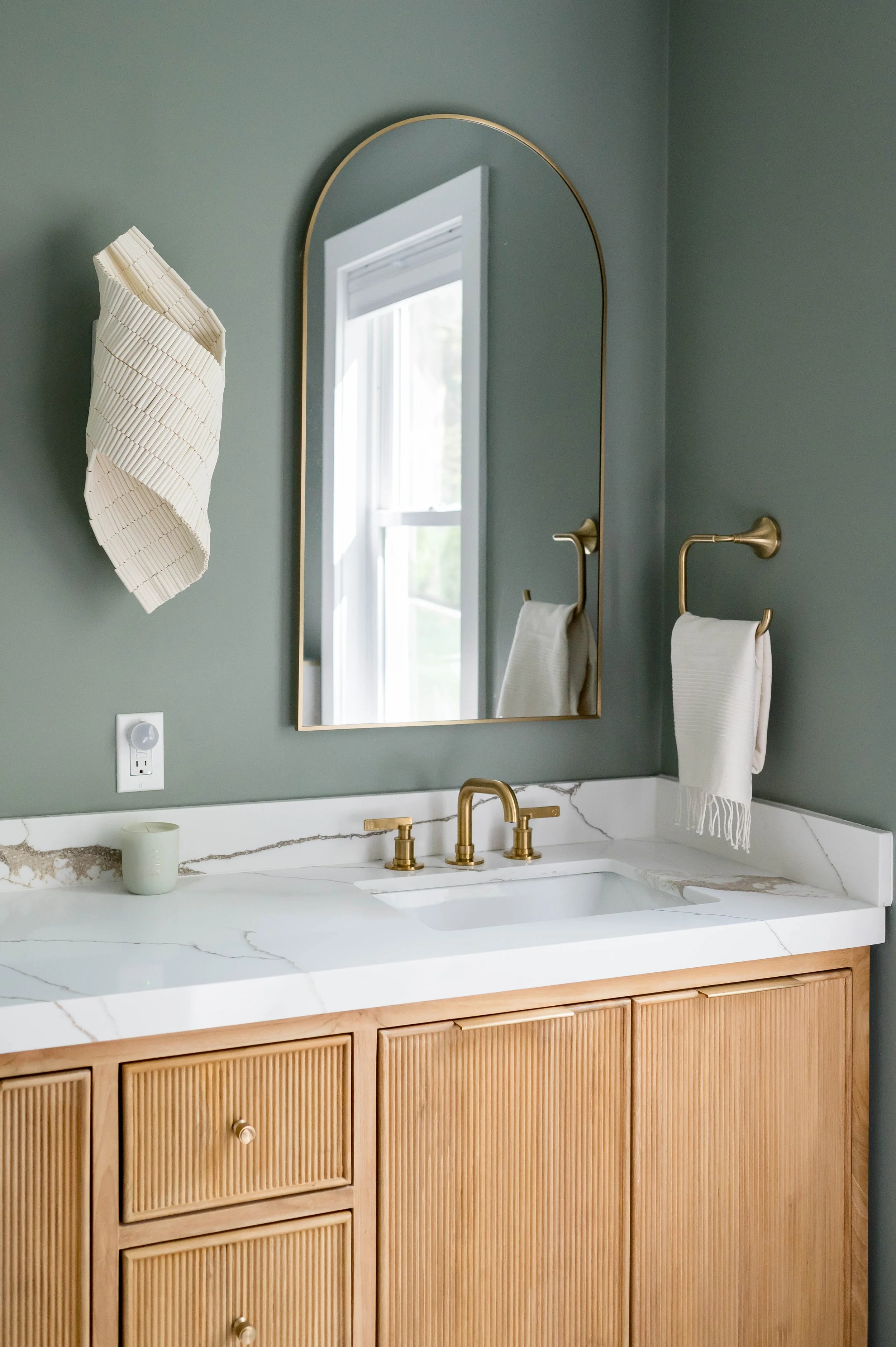
Custom vs. stock. A stock vanity and a custom-built one can differ by thousands, but custom is also how you fit an awkward space or get a look nobody else has.
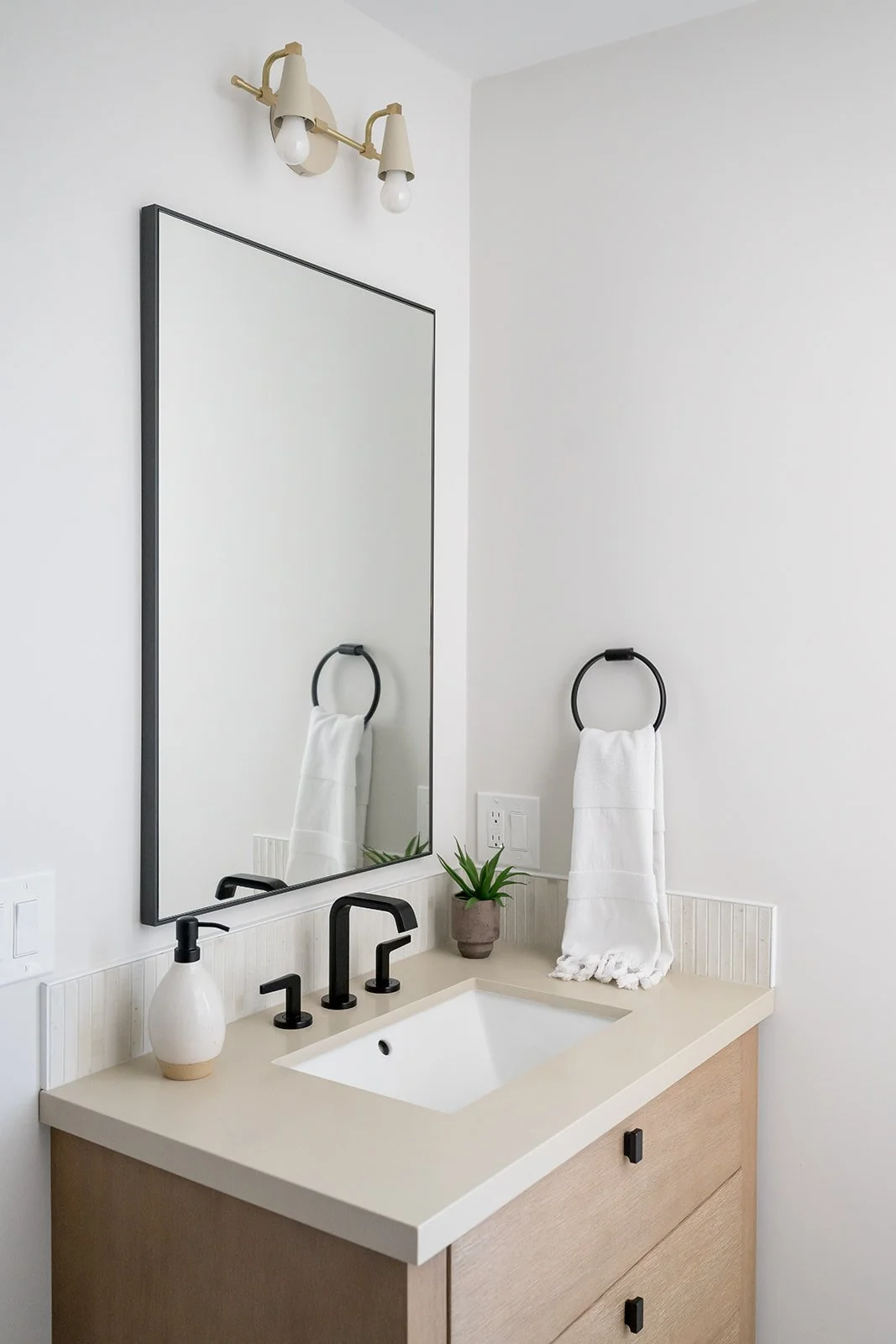
Fixtures and finishes. Faucets, lighting, hardware, and mirrors look small on a spreadsheet and become a big line when you add them together.
What’s behind the walls. Water damage, outdated wiring, or a rotted subfloor can’t be priced until the room is open. This is normal, not a sign anything went wrong.

Budget for surprises
A common rule of thumb is to set aside an extra 10% to 20% for the unexpected. If nothing turns up, great. If something does, you won’t have to cut finishes mid-project to cover it. Old houses especially tend to have something to find.
Where to spend and where to save
Spend on the things you’ll touch and rely on every day, or can’t easily change later: waterproofing and plumbing, the shower valve and fixtures, a vanity with good storage, and lighting.
Save on items that are easy to upgrade later or don’t affect daily use: decorative accessories, mirrors, and paint-grade details. You can also use a statement tile in one spot (a shower niche or a single wall) and a simpler tile everywhere else.
Why the process affects your budget
A lot of bathroom overspending comes from decisions made too late or in the wrong order. Falling in love with a tile that’s backordered, discovering the vanity doesn’t fit the plumbing, or approving a layout before anyone checks what’s behind the wall are all expensive mistakes.
That’s the advantage of having design and construction under one roof. We plan the layout, selections, and scope together, check lead times before anything is ordered, and walk through mockups and renderings before anything gets cut. Fewer surprises means fewer change orders. Every project is different, so we always scope before we quote.
Frequently asked questions
How much does a bathroom remodel cost per square foot?
Published figures vary widely, from about $70 to $400 per square foot, with many guides citing an average near $120. Small bathrooms often cost more per square foot because plumbing, tile, and fixtures cost roughly the same regardless of size.
How long does a bathroom remodel take?
A full remodel typically takes several weeks, and custom elements, backordered materials, and permits can extend that. Our typical timeline is [X–Y weeks].
Is it cheaper to keep the same layout?
Almost always. Moving plumbing is one of the biggest cost drivers.
Do I need a permit?
It depends on your town and the scope of work. We handle permitting for our clients in [NH/MA towns you serve].
Planning a bathroom remodel?
We’d love to hear what you have in mind.