
top 5 Materials for Coastal Homes in New HampshirE
We get asked some version of this question on almost every project:
"That's gorgeous — but will it hold up?"
Living and building on the NH seacoast is a privilege. It's also genuinely hard on a home. Salt air, humidity, UV, freeze-thaw cycles — your house takes a beating year-round in ways that a home in, say, Concord just doesn't. And the wrong material choices don't just cost you money down the road. They cost you the look you fell in love with in the first place.
Here's our honest, no-fluff breakdown of what we actually specify — and why. Spoiler: we almost always start with natural materials first, because nothing man-made quite replicates the warmth and character of something that came from the earth.
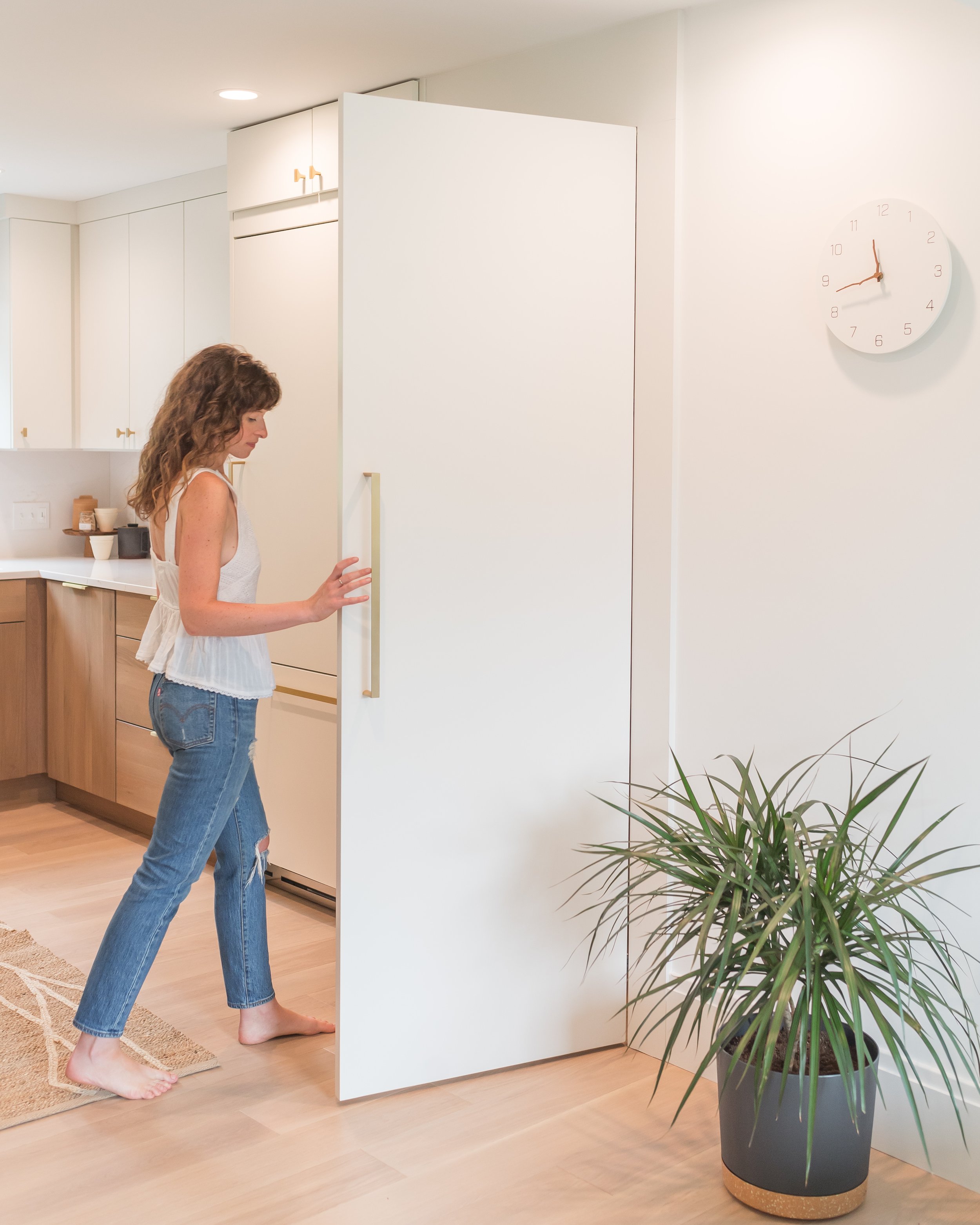
Flooring: white oak is our desert island answer
We spec white oak on the majority of our projects, and for good reason. It's a closed-grain wood, which means it's naturally more moisture-resistant than most other hardwoods — a meaningful advantage in a coastal climate. The grain is subtle and beautiful, it takes finish incredibly well, and it has this quality of looking equally at home in a barefoot-casual beach house or a more refined, elevated interior. It ages gracefully, and it can be refinished multiple times over its lifetime, which means you're investing once and living with it for decades.
A few quick care tips for white oak floors:
Sweep or vacuum regularly with a soft-bristle attachment — grit and sand are the real enemy, not moisture
Wipe up spills immediately; even water can react with the wood's tannins if left sitting
Use a pH-neutral cleaner formulated for hardwood, never anything harsh
Place felt pads under every piece of furniture that touches the floor
Keep interior humidity between 30–50% to prevent expansion and contraction — this matters more on the seacoast than people realize
Plan on a professional refinish every 7–10 years to bring it back to life
One note: we generally lean toward natural or water-based finishes over oil-based polyurethane, which tends to yellow over time and fights the natural warmth of the wood. We want the floor to look like white oak, not varnished white oak.
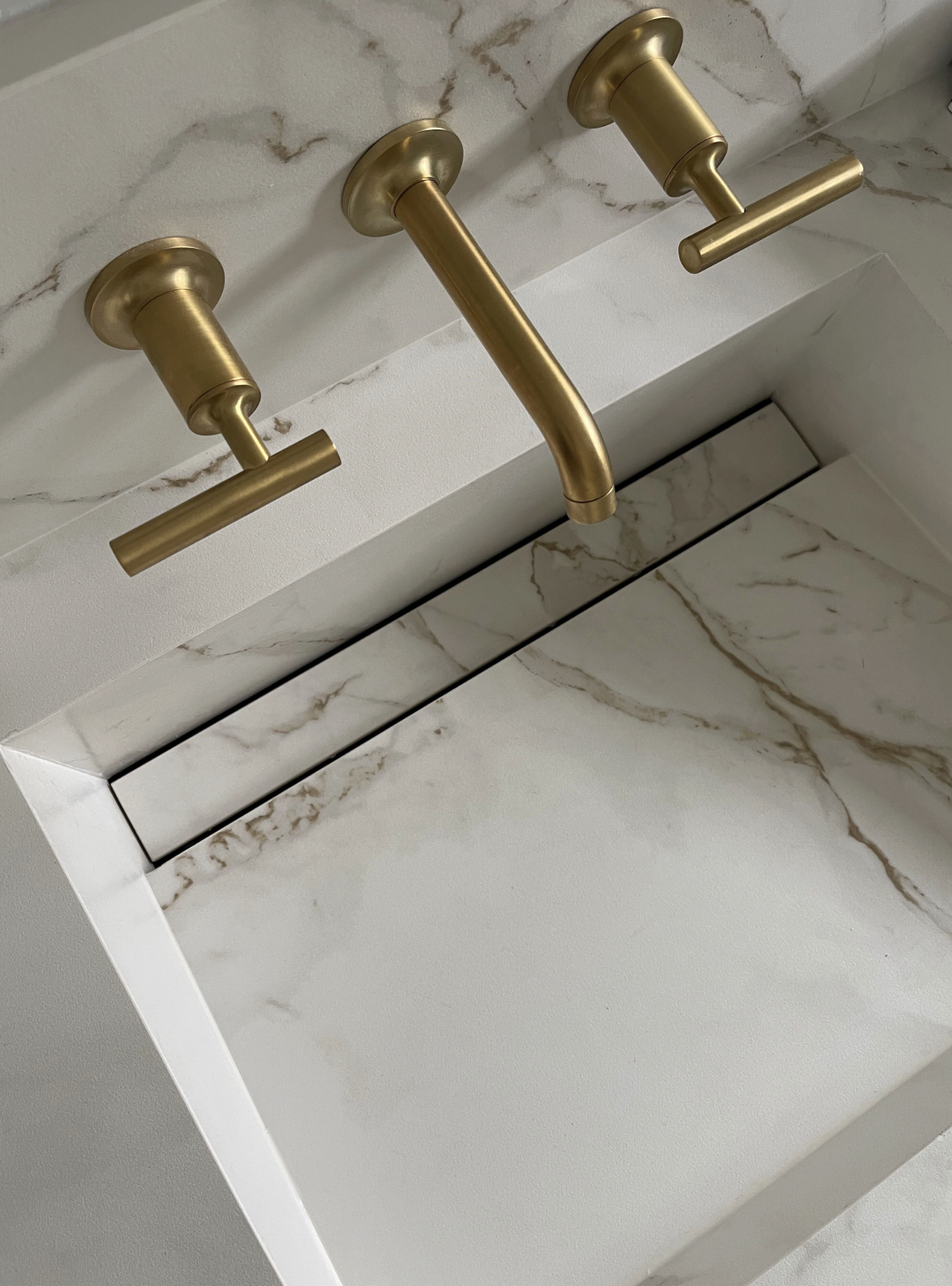
Countertops: meet Dekton by Cosentino
This is our top recommendation, full stop — and not just because of how it performs, though that's remarkable on its own.
Dekton is what's called an ultracompact sintered surface, made from a sophisticated blend of over 20 natural minerals — glass, porcelain, and quartz among them — compressed under extraordinary heat and pressure. The result is essentially null porosity: it doesn't stain, doesn't need sealing, can't be damaged by heat, and is highly scratch resistant. It performs beautifully both indoors and out, which makes it ideal for the outdoor kitchens and open-living layouts we love to design.
The part we're especially proud to stand behind: Dekton is carbon neutral. It's one of the rare countertop materials where we can recommend it for performance, aesthetics, and environmental responsibility without having to make any trade-offs. For clients who care about where their materials come from and what impact they have — and more of our clients do, every year — Dekton is an easy yes.
It also comes in a stunning range of finishes that mimic natural stone beautifully, so you get the look of marble or quartzite without the maintenance anxiety that comes with porous natural stone near the water.
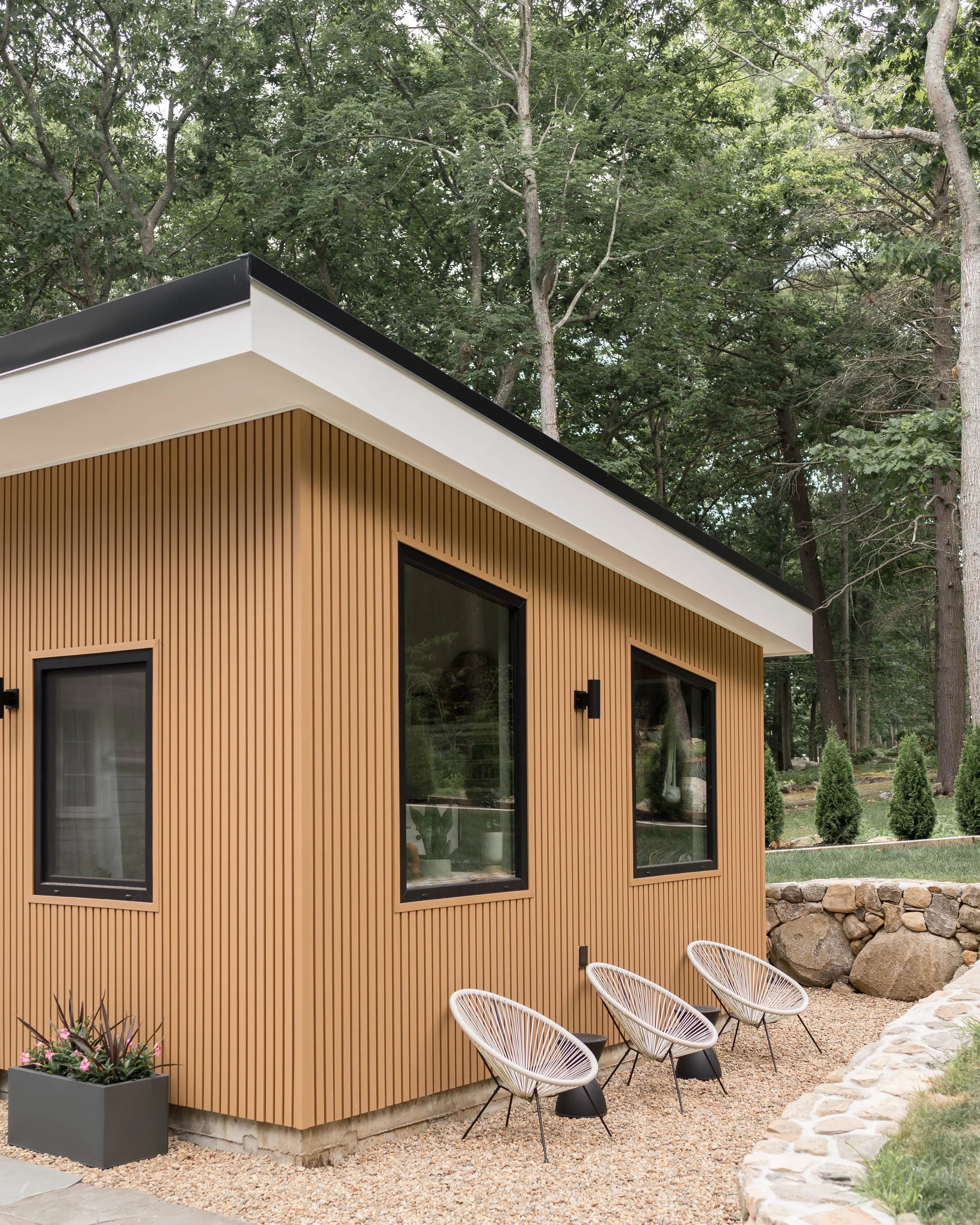
Exterior: materials that earn their character
This is where we get to have a real opinion. We love natural exterior materials — not just for how they look on day one, but for how they age. A cedar-clad home on the NH seacoast ten years in has a quality that no synthetic material can replicate. It looks like it belongs here.
Cedar shakes and planks: our sentimental favorite
Cedar is naturally rot-resistant and dimensionally stable in coastal climates, and it weathers into that silvery-gray driftwood tone that feels completely at home on the seacoast. The key is treating it as a relationship, not a set-it-and-forget-it material.
A few quick maintenance tips for cedar:
If you want to preserve the natural warm tone, apply a quality penetrating oil or semi-transparent stain every 3–5 years — this feeds the wood and slows the graying process
If you love the silver-gray weathered look (we do), a UV-blocking clear sealer will protect the wood while letting it develop that coastal patina naturally
Inspect annually for any cracked or cupped shakes, especially after a hard winter — catching small issues early keeps them small
Keep vegetation trimmed back from the siding; trapped moisture is cedar's only real enemy
When cedar is maintained with even minimal intention, it just keeps getting better. It's the kind of exterior that makes a house look like it has a story.
Composite decking and cladding: the smart complement
For decking surfaces and areas that take the most punishment — ground contact, direct spray, constant wet-dry cycles — composite is where we land. It won't warp, rot, or splinter, holds its color well, and requires almost no maintenance beyond an occasional rinse. We think of it as the workhorse that frees up your attention for the materials that actually benefit from it.
Vinyl: better than you think
We'd be doing our clients a disservice not to mention it. Today's premium vinyl siding has come a very long way — the profiles, textures, and colorways are genuinely sophisticated, and it's one of the most durable, low-maintenance exterior options available in a coastal climate. It doesn't rot, doesn't need painting, and handles salt air and moisture without complaint. For clients working within a tighter budget, or for a secondary structure like a garage or guest cottage where the priority is performance over prestige, vinyl is a completely legitimate choice that we're happy to specify without apology.

Upholstery: performance fabrics aren't what they used to be
This is one of those categories that has completely changed in the last decade.
Sunbrella and its competitors have gotten so good that there's really no reason to use anything else for upholstered pieces that live near windows, screened porches, or outdoor spaces. They're soft, they come in beautiful textures, and they don't fade or grow mildew when a damp towel gets thrown on them. We use them constantly.
But what’s important to understand is that “performance” no longer means stiff or overly synthetic. These fabrics now mimic the look and feel of linen, cotton, even boucle—while quietly doing a much better job handling real life. Salt air, sunscreen, wet bathing suits, sandy feet… this is where they shine.
Where we still mix things up is in lower-risk areas—bedrooms, formal living spaces, or pieces that won’t see daily wear. That’s where we might bring in a true linen or a more delicate textile for added softness and variation. It’s always about balance: letting the hardworking materials carry the load where they need to, and layering in more nuanced pieces where they can be appreciated.
A quick reality check: even the best performance fabric isn’t invincible. Regular vacuuming, quick cleanup of spills, and the occasional professional cleaning will go a long way. But compared to what upholstery used to require, it’s night and day.
If you want a space that feels relaxed and livable without constantly worrying about it, this is one of the easiest wins.
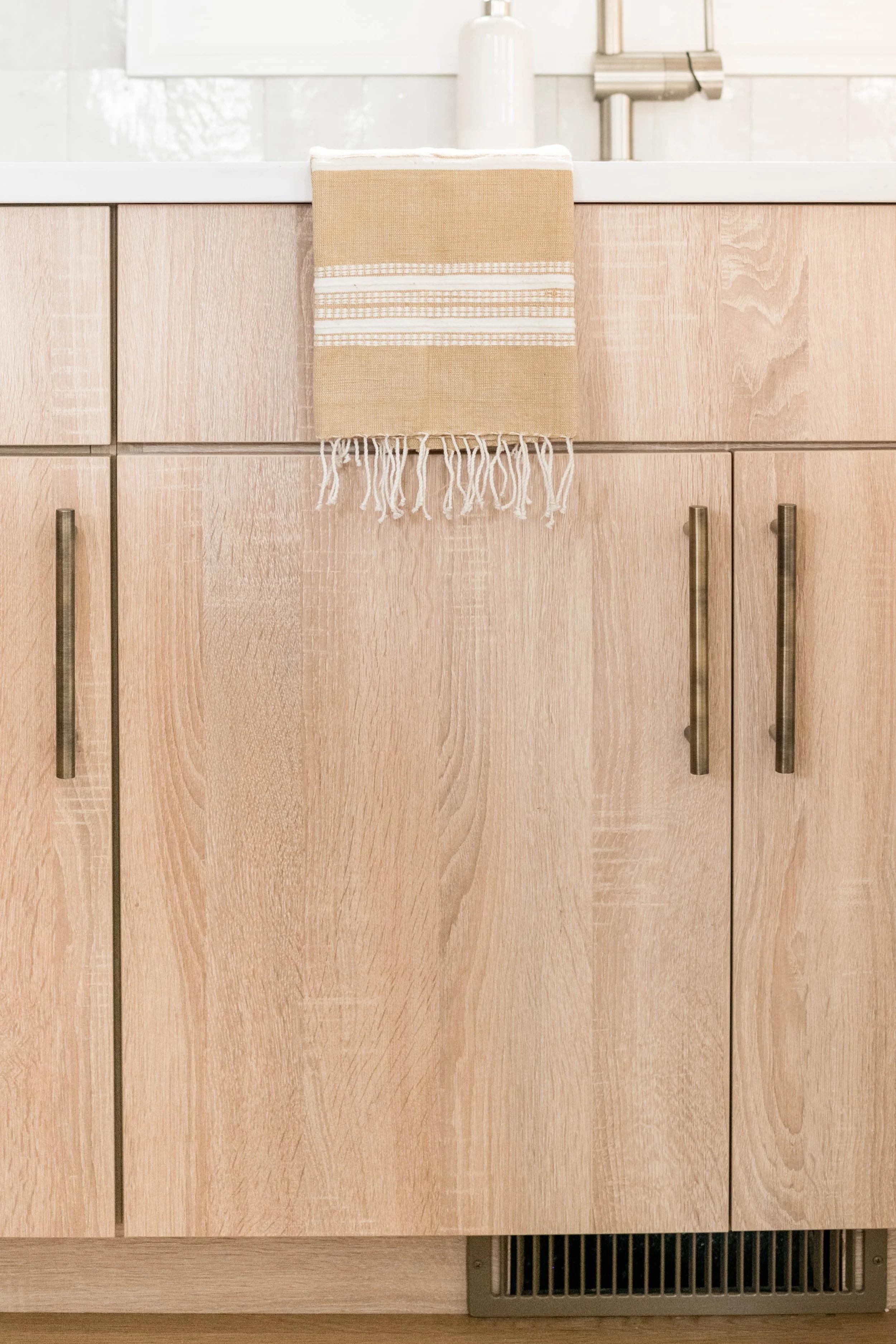
Hardware: location matters more than finish
This really depends on the space and, more importantly, the exposure.
Near the coast, hardware is one of the first places you’ll see wear if the wrong material is used. Salt air doesn’t mess around—it will pit, tarnish, and corrode faster than most people expect. So while finish is important aesthetically, material and placement come first.
For interior applications, our go-to’s are still brass and matte black. We love the warmth and timelessness that comes with brass—it develops a patina over time that feels intentional, not worn out, and it works across a wide range of styles. Matte black, on the other hand, gives you that crisp contrast and tends to anchor a space, especially when paired with lighter woods or cabinetry.
Where we’re more careful is in high-exposure zones—exterior doors, outdoor showers, pool areas, or anything within direct reach of salt air and moisture. That’s where we start looking at marine-grade stainless steel or specially coated hardware that’s designed to hold up in harsh environments. It may not always have the same warmth as brass, but it earns its keep in longevity.
The big takeaway: hardware isn’t just a finishing touch. It’s something you touch every single day. When it starts to fail, you feel it immediately. Choosing the right material upfront means it continues to look good—and function properly—years down the line.